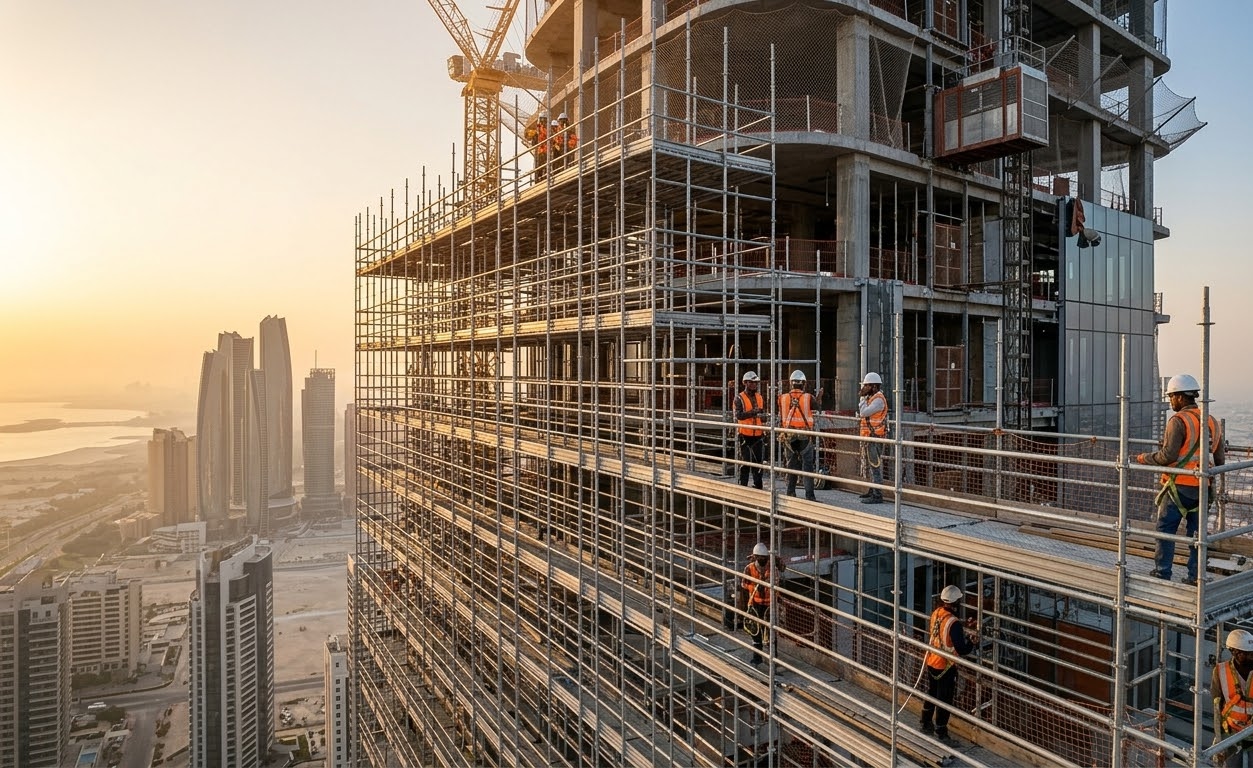
Abu Dhabi is one of the fastest-evolving construction markets in the Gulf. From high-rise towers on Al Reem Island to villas in Khalifa City and industrial facilities in Mussafah, every project depends on one thing: safe access to height. Scaffolding provides that access, and for most contractors, scaffolding rental Abu Dhabi is the most practical way to get it.
This guide explains how scaffolding works, which systems are most common, what affects rental costs, and how to plan a safe, efficient setup. Whether you manage a large commercial build or a small renovation, it will help you make better decisions before the first tube goes up.
Scaffolding is a temporary structure that supports workers, tools and materials at height. It lets crews reach facades, ceilings, roofs and other elevated areas safely and efficiently. Beyond access, a well-built scaffold:
Because it is temporary, scaffolding is only needed for part of a project’s timeline. That is exactly why renting makes so much sense.
Different projects call for different systems. Understanding the main types helps you describe your requirements clearly when requesting a quote.
Cuplock is a modular system where vertical standards and horizontal ledgers lock together at fixed points using a cup-and-blade mechanism. It is fast to assemble, strong and widely used on large commercial and infrastructure projects. Its load capacity makes it ideal for tall structures and heavy-duty work.
Ringlock uses rosette connectors that allow multiple ledgers to attach at different angles. It is highly versatile, suits curved or irregular facades, and is popular for complex architectural projects, shipyards and industrial plants.
This traditional system uses steel tubes joined with couplers. It is extremely flexible and can be adapted to nearly any shape or site condition, though it takes more skilled labor and time to erect than modular systems.
Frame scaffolding consists of prefabricated steel frames connected by cross braces. It is quick to install and suits straightforward jobs such as painting, plastering and low to mid-rise façade work.
Mounted on lockable wheels, mobile towers are perfect for indoor work, maintenance, and jobs requiring frequent repositioning. Warehouses, malls and hotels commonly use them.
Lightweight and corrosion-resistant, aluminium towers are easy to move and handle. They suit interior fit-out, electrical work and light maintenance.
Suspended platforms hang from the roof or upper structure, which makes them ideal for high-rise façade cleaning and repair. Cantilever systems extend outward from the building when ground-level support isn’t possible.
For most contractors, renting is more economical and less complicated than owning. The main advantages are:
Lower upfront cost. Buying scaffolding requires significant capital. Renting converts that expense into a manageable, project-based cost.
No storage or maintenance burden. Scaffolding components need warehouse space, regular inspection, cleaning and repair. A rental provider handles all of this.
Flexibility. Project needs change. With rental, you can scale quantities up or down and switch between systems as the work evolves.
Access to certified, inspected equipment. Reputable providers maintain their stock and supply materials that meet recognized safety standards.
Reduced downtime. Many rental companies also offer delivery, erection, modification and dismantling, so your team can focus on core construction tasks.
Pricing varies from project to project. These are the main variables:
Always request an itemized quotation so you can compare offers fairly and avoid hidden charges.
The company you work with matters as much as the equipment itself. When evaluating a scaffolding supplier in Abu Dhabi, look for the following:
Local climate adds challenges that should be factored into every scaffolding plan.
Extreme heat and humidity. Summer temperatures can exceed 45°C. Workers need adequate breaks, hydration and shade. Metal components can become very hot, so gloves and sensible scheduling are important.
Wind and shamal conditions. Strong winds can put significant lateral load on scaffolds, especially when sheeting or netting is attached. Proper tie-ins, bracing and wind assessments are essential.
Dust and sand. Debris can reduce visibility and make platforms slippery. Regular cleaning and good housekeeping help prevent accidents.
Coastal corrosion. Salt-laden air accelerates corrosion on sites near the sea, so choose well-maintained or galvanized components and inspect them often.
Beyond environmental factors, follow these universal best practices:
A bit of preparation prevents costly delays.
Define your scope early. Share drawings, dimensions, working heights and the nature of the work with your provider so they can recommend the right system.
Visit the site together. A site walkthrough helps identify access limits, ground conditions, overhead hazards and tie-in points.
Plan your timeline realistically. Include erection, working duration, possible extensions and dismantling. Keeping scaffolding on site longer than needed adds cost.
Coordinate with other trades. Make sure the scaffold layout works for everyone who needs access, including painters, glaziers and MEP crews.
Check permits and approvals. Some locations, particularly public areas, may require permissions before installation.
Keep documentation handy. Maintain inspection records, certificates and handover tags on site for audits and safety checks.
Scaffolding is one of the most critical, and most overlooked, elements of a successful build. Getting it right protects your workers, keeps your schedule on track and helps you stay within budget. By understanding the available systems, knowing what drives costs and partnering with a reputable scaffolding supplier in Abu Dhabi, you set your project up for success from day one.
For contractors, developers and facility managers alike, scaffolding rental Abu Dhabi offers a flexible, cost-effective and safety-focused solution. Plan carefully, prioritize quality and compliance, and your next project will reach new heights safely.



Get safe, reliable scaffolding for your next project. We make, rent, and install scaffolding systems for construction sites, oil rigs, and industrial projects across all seven emirates.
© 2026 Mazoon Al Khair Metal Scaffolding Services All rights reserved | powered by GNEXT